
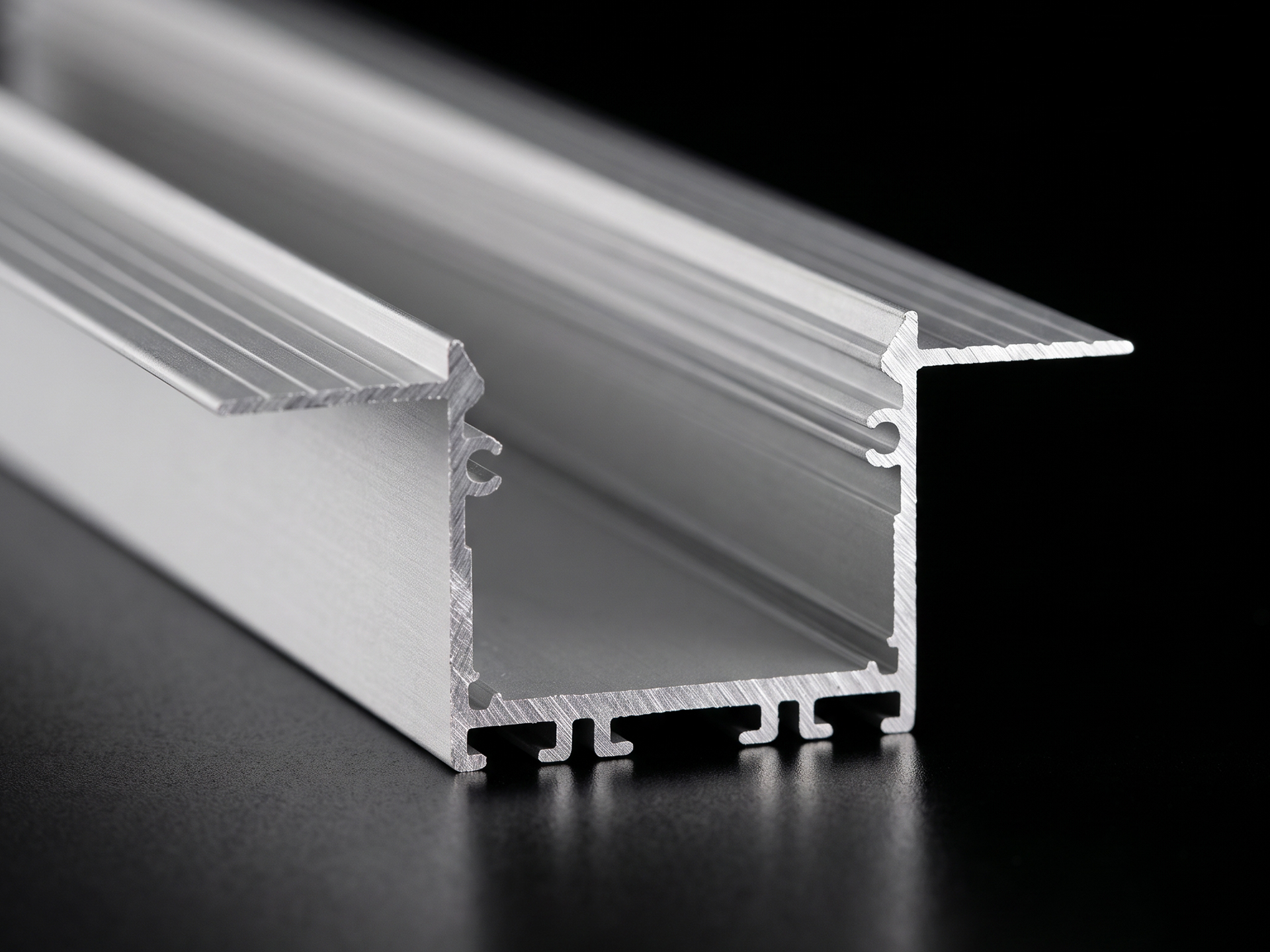
“Engineering of Light” – a TECH Light series on how LED profiles are made
Why a few micrometres of oxide decide the whole profile
In the previous article we wrote that a LED profile is both a heat sink and the optics of the LED strip. We left one thread for the end: the anodic layer – the final stage of profile production.
The anodic layer is measured in micrometres and cannot be assessed with the naked eye. And yet it determines how the profile will look after years of use, how it will cope during installation and how it will behave when bonded.
Anodising is also a production stage that even specialists in the LED lighting industry say can be skipped, especially when the profile is going to disappear in plasterboard construction. But is that really the case? Is anodising a process worth saving on? We will devote the next article to that subject.
In this article we show what you actually choose when ordering an anodised LED profile: the coating thickness, the colour and what you need to know before installation.
Not a coating, but transformed aluminium
Although the process itself seems simple, achieving a perfect result is a precise electrochemical operation.
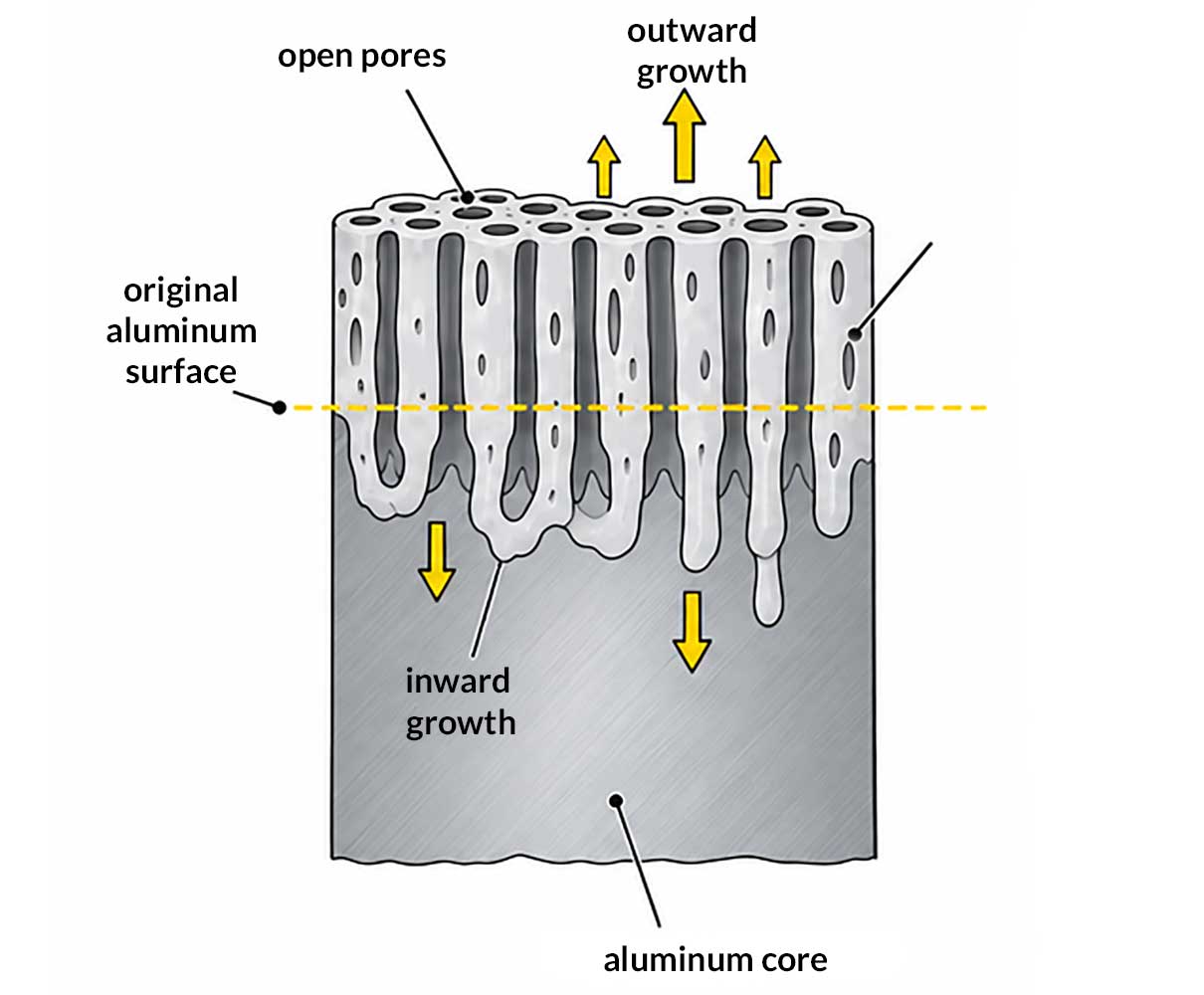
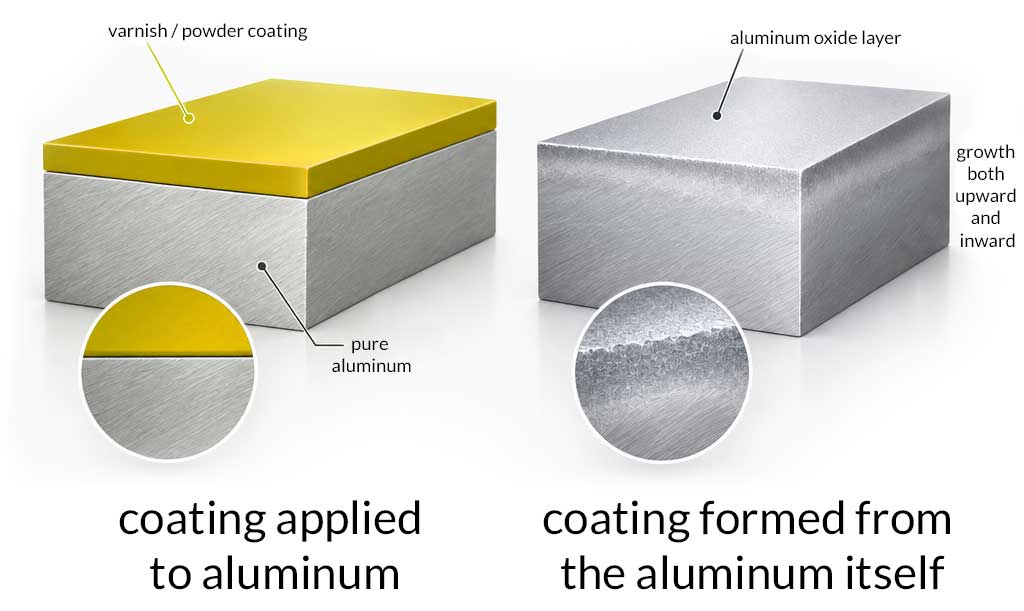
Paint and powder coating lie on the metal; the anodic layer grows out of it. Under voltage in an electrolytic bath, a hard oxide layer forms on the aluminium surface and develops into the material and outwards at the same time.
This has specific consequences that matter in practice:
- The anodic layer is permanently bonded with the substrate, because it is formed from the aluminium itself rather than deposited on it.
- Anodising is a dimensional process – the micrometres of the layer add to the dimension of the profile, including at the point where the cover fits.
- The anodic layer is transparent – it does not hide scratches, inclusions in the alloy or traces of uneven etching; it even makes them more visible.
- Fluctuations in current density or a minimal change in electrolyte temperature can lead to differences in the appearance of profiles between production batches.
The appearance of an anodised profile therefore depends not only on the bath itself, but above all on the surface preparation that precedes it. A good anodic layer does not repair neglect from earlier stages – it exposes it.
That is why the last stage says so much about how all the previous stages of LED profile production went.
A freshly formed anodic layer is porous – which is why it can be dyed. At the end of the process the pores are closed by sealing. An unsealed anodic layer absorbs dirt and moisture, so sealing is not cosmetics but a condition of durability and appearance.
Anodic layer thickness: the parameter worth checking before ordering
The thickness of the anodic coating is the key parameter determining the service life of a LED profile. The mere mention of an anodising process does not define the degree of protection of the aluminium. The thickness of the oxide layer directly determines the profile’s resistance to corrosion, scratching and mechanical wear (e.g. during installation or cleaning). A higher coating thickness class extends the service life of the profile, which comes with a higher cost of the technological process.
Thicker does not always mean better. The oxide is hard but brittle – with bent profiles this is a real parameter, both aesthetic and technical.
Colour: natural or dyed
The natural anodic layer, silver-satin, contains no dye – it is the colour of aluminium oxide itself. There is nothing in it that could fade, which is why it is the most predictable over time. The final effect, however, depends on a number of variables that require strict laboratory control. The composition of the aluminium alloy is crucial, because individual alloys react differently to the anodic bath. While some additions guarantee clean and uniform colours, other components – such as copper, iron or an excess of silicon – can cause greying of the coating or make it difficult to obtain the desired shade.
Dyeing is a process in which the microscopic pores of the aluminium oxide are filled with dye and then permanently closed by sealing. The options are intense organic dyes with lower UV resistance and the exceptionally durable electrolytic colouring (deposition of metal particles in the pores), used mainly in architecture to obtain shades from champagne to black. Regardless of the method chosen, the final success depends on the stability of the bath parameters, the temperature and the time. It is strict laboratory control that makes it possible to maintain repeatability of shade and reduces the risk of differences between profiles in a single delivery.
What to remember when installing anodised LED profiles
Anodising changes the properties of the aluminium surface. To avoid surprises on site, it is worth knowing about these three issues already at the design stage:
- The anodic layer is an electrical insulator. The oxide coating does not conduct electricity. If the LED profile is to act as a contact or an earth connection, the anodised layer must be mechanically removed at the point of the electrical connection.
- The surface is sealed and non-absorbent. This ensures an excellent appearance but requires appropriate installation. For adhesives and tapes to hold properly, the surface must be thoroughly degreased and products dedicated to anodised aluminium must be used.
- Cutting exposes bare metal. Shortening the profile interrupts the continuity of the protective coating. In dry interiors this usually has no practical significance; in places with high humidity or outdoors, however, the cut edges should be protected.
Why we, as a manufacturer, place so much emphasis on this
Anodising is the last stage of production, which makes it easy to regard it as a mere aesthetic finish. In practice, however, this process ties together everything achieved earlier: it makes it possible to control the dimension at the point where the cover fits, it provides a shade that is stable over time (with UV-resistant dyes) and it determines the durability of the surface.
At TECH Light we treat anodising as an integral part of the profile, not an optional addition. Dimensional stability and the highest quality of the protective coating are for us key technical parameters that have remained unchanged for years. If your project has special requirements, your TECH Light account manager will help you choose the right solution.
Naturally, a question arises that we hear more and more often in business conversations: if the profile ultimately disappears into plaster or a furniture build-in, is anodising needed at all? In the next article of the “Engineering of Light” series we will compare a mill-finish profile with an anodised one point by point.
We will look at facts and myths – including the popular argument about heat conduction which, although it sounds convincing, requires a technical correction.
TECH Light – Premium solutions at Your fingertips.
[Order samples →] | [Contact your TL account manager →]


